The problem
Mosquitoes are the deadliest animals on the planet.
Mosquitoes kill more people than every other animal combined. One species, Aedes aegypti, carries dengue, Zika, yellow fever, and chikungunya, which make hundreds of millions of people sick every year. Their range is spreading faster than ever, and displaced communities carry the heaviest burden.
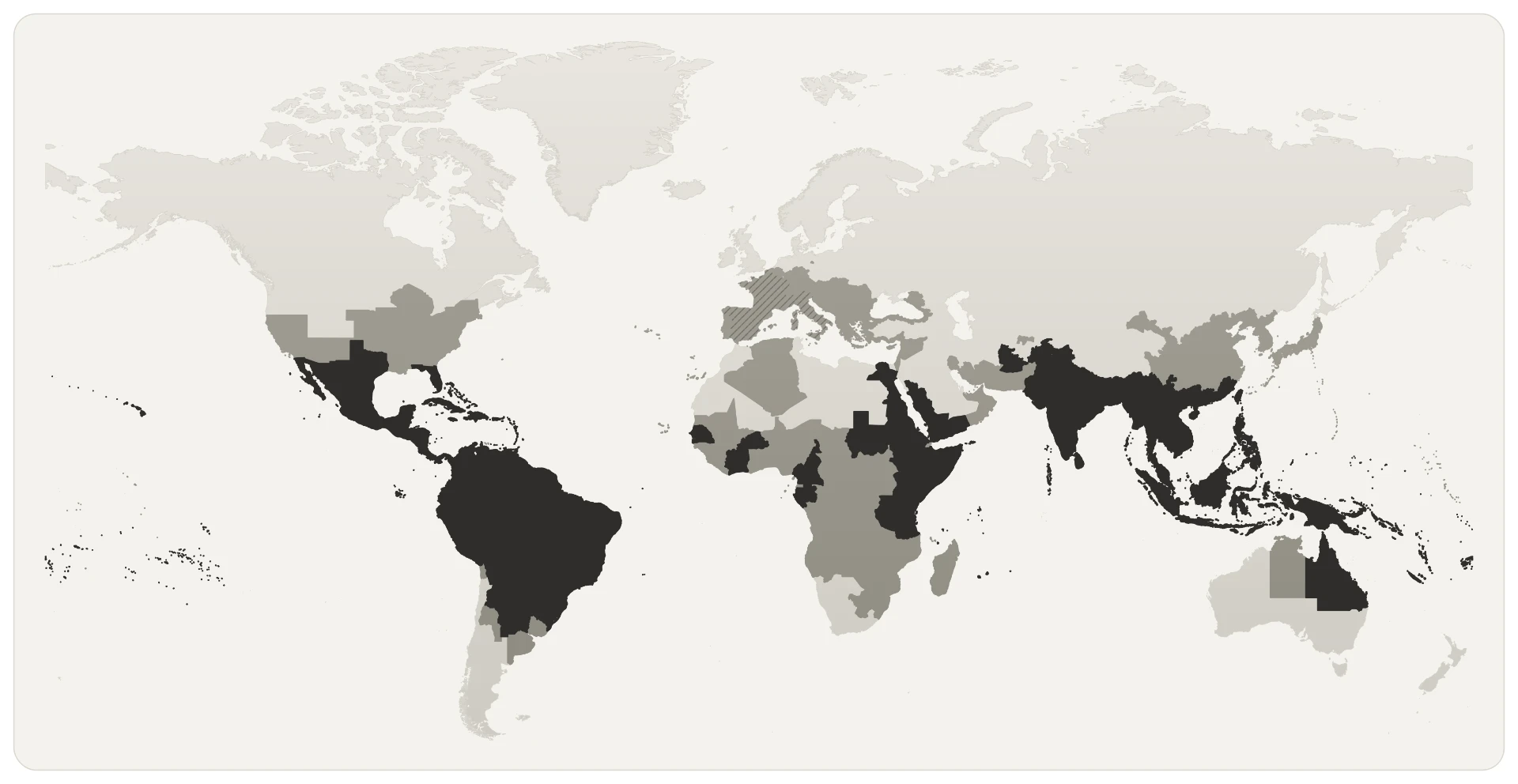
- Dengue transmission frequent or sporadic
- Established range of Aedes aegypti or Ae. albopictus
- Non endemic recurrent local transmission
3.9bn
People live at risk of dengue in more than 120 countries.
400m
Estimated dengue infections every year worldwide.
600k+
Deaths a year from malaria, mostly young children.
Why this work
Behavior change at scale.
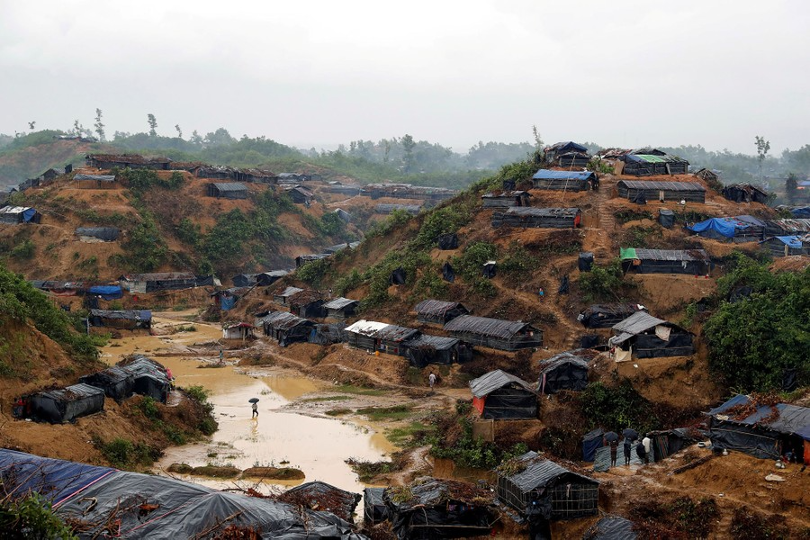
Refugee camps face intense mosquito pressure, limited infrastructure, and a constant risk of dengue, malaria, and other mosquito-borne disease. Conventional spraying is difficult to sustain and can harm the fragile ecosystems people depend on.
Our areal mating-disruption system works without toxins, without power, and without daily intervention. Passive dispensers release pheromone across the settlement, reducing adult mosquito abundance and giving health teams a practical, scalable tool.
Refugee protection
Protection where it matters most.
We have just deployed our areal mating-disruption system in Cox's Bazar, Bangladesh, together with the local UNHCR team, to help shield Rohingya refugees from mosquito-borne disease.
Cox's Bazar deployment
The world's largest refugee camp, safer from mosquitoes.
143,000
People protected in the 2026 pilot.
2026 pilot
1,200
Passive dispensers installed across 300 hectares.
Coverage
1.1M
People expected to be protected in the 2027 rollout.
2027 rollout
A calm layer of defense.
The Cox's Bazar deployment is run together with the local UNHCR team and designed to integrate with existing public-health programs. Our role is to provide the semiochemical technology, training, and deployment guidance.
Deployment principles
No toxic actives
The system relies entirely on behavior-modifying pheromones, protecting people, pollinators, and waterways.
Passive operation
Dispensers are hung once and release pheromone continuously for months.
Community-led
Local teams are trained to install, monitor, and maintain the system.
Evidence-driven
Entomological monitoring tracks mosquito abundance and bite risk throughout the program.
Partner with us
Request proposal for humanitarian or public health initiative.
If you represent an NGO, public-health program, or humanitarian site, we would like to hear from you.